
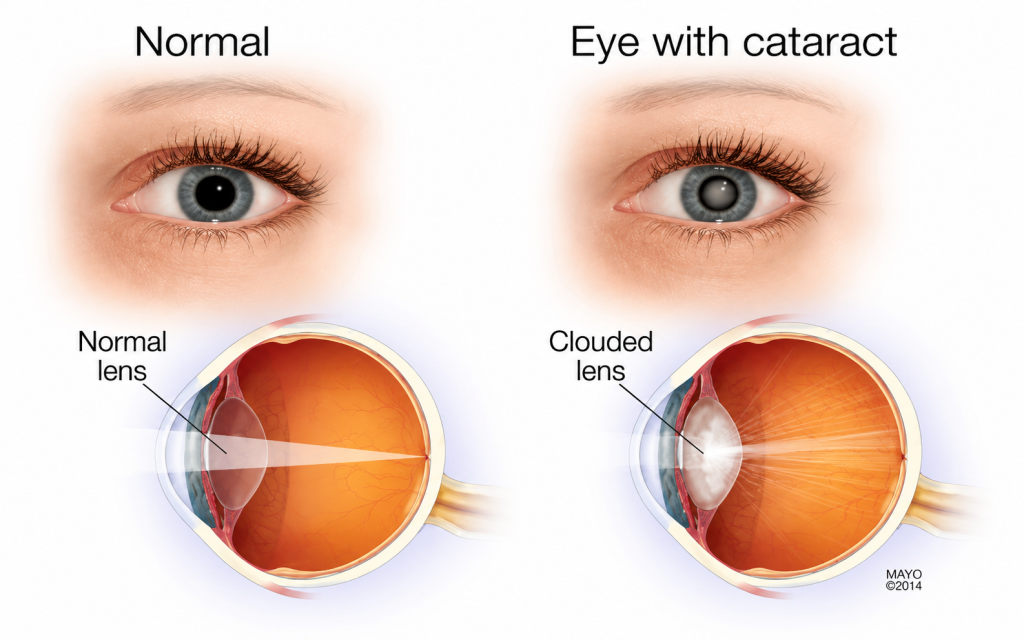
Cataracts
Cataracts are one of the most common eye diseases among the elderly. The primary characteristic is that the crystalline lens inside the eye becomes cloudy, preventing light from being clearly projected onto the retina, which results in blurred vision.
This disease typically occurs in people over the age of 50. As age advances, the incidence rate increases significantly, and the degree of lens cloudiness gradually worsens. The condition can develop in one eye or both eyes—either sequentially or simultaneously—and the progression of the disease is relatively slow. Aside from aging, factors such as diabetes, hypertension, eye injuries, long-term steroid use, and excessive exposure to ultraviolet (UV) radiation can increase the risk of developing cataracts.
- Symptoms: Gradual decline in vision, misty or foggy vision as if blocked by mist, fading or dulling of colors, reduced night vision, etc.
- Prevention: Wearing sunglasses can reduce UV damage to the eyes. Maintain a healthy diet by increasing the intake of foods rich in antioxidants (such as vitamins C and E) and lutein.
How Traditional Chinese Medicine (TCM) Views Cataracts
In TCM, cataracts are referred to as “Yuan Yi Nei Zhang” (circular opacity internal obstruction). Its formation is believed to be closely related to the following factors:
- Liver and Kidney Deficiency: As age increases, the essential qi (energy) of the liver and kidneys gradually becomes depleted. Unable to nourish and moisten the eyes, the lens loses its nourishment and becomes cloudy. This is the most common syndrome type, usually accompanied by symptoms like dizziness, tinnitus, and soreness and weakness in the lower back and knees.
- Spleen Qi Weakness: The spleen governs transportation and transformation and is the source of qi and blood generation. If the spleen qi is weak, its transport function becomes impaired, preventing qi and blood from ascending to nourish the eyes, leading to a lack of ocular nourishment. Patients with this type often present with a sallow complexion, fatigue, lack of energy, and poor appetite.
- Qi Stagnation and Blood Stasis: When the flow of qi and blood is sluggish, blood stasis obstructs the meridians of the eye, hindering the transport of essential nutrients and causing the lens to become cloudy. This is more commonly seen in patients with trauma or chronic illnesses.
- Liver Heat Disturbing Upward: Excessive liver fire causes pathogenic heat to attack upward into the eyes, scorching the lens and leading to cloudiness. Patients often experience symptoms such as a bitter taste in the mouth, a dry throat, headaches, and dry, painful, or distended eyes.
How TCM Manages Cataracts
TCM management for early-stage cataracts emphasizes “addressing the root cause”—that is, regulating the body and restoring the functions of the internal organs to improve eye conditions. Common methods include:
- Internal Herbal Medicine: Based on different syndrome types, TCM practitioners prescribe different herbal formulas:
- For Liver and Kidney Deficiency: Commonly used formulas include Lycium Berry, Chrysanthemum, and Rehmannia Pill (Qiju Dihuang Wan) or Dendrobium Night-Light Pill (Shihu Yeguang Wan) to nourish the liver and kidneys and improve eyesight.
- For Spleen Qi Weakness: Commonly used formulas include Tonify the Middle and Augment Qi Decoction (Buzhong Yiqi Tang) or Four Gentlemen Decoction (Si Junzi Tang) to strengthen the spleen, boost qi, raise the clear yang, and brighten the eyes.
- For Qi Stagnation and Blood Stasis: Formulas like Peach Kernel and Safflower Four-Substance Decoction (Taohong Siwu Tang) are primarily used to promote blood circulation and resolve stasis.
- Acupuncture: By stimulating eye-area and related acupoints—such as Taiyang, Zanzhu, Sibai, Fengchi, Guangming, and Jingming—acupuncture helps clear the meridians, promote qi and blood circulation in the eyes, and improve lens cloudiness. For patients with early-stage cataracts, this can delay the progression of the disease and relieve symptoms.
Important Reminder: It must be emphasized that TCM is primarily suitable for the early stages of cataracts, aiming to delay progression and improve symptoms. For cataracts that have already developed to the mature stage and severely affect vision, surgery remains universally recognized as the most effective intervention.
Dietary Therapy (Dietary Supplements)
During the management of cataracts, dietary therapy plays a supportive role. By replenishing the nutrients required by the body, it helps delay the progression of the condition but cannot completely cure cataracts. Below are some foods and dietary recipes that are beneficial to eye health and can support cataract management.
Foods Rich in Vitamins C and E
Both vitamins C and E are potent antioxidants that help clear free radicals in the body and reduce oxidative damage to the lens.
- Foods rich in Vitamin C: Citrus fruits (oranges, lemons), strawberries, tomatoes, broccoli, green peppers, etc.
- Foods rich in Vitamin E: Nuts (almonds, walnuts), seeds (sunflower seeds, pumpkin seeds), vegetable oils (wheat germ oil, corn oil), deep green leafy vegetables (spinach, kale), etc.
Foods Rich in Lutein and Zeaxanthin
These two carotenoids are the primary pigments that make up the macular region of the human retina. They absorb harmful blue light entering the eyes and protect them from oxidative damage.
- Common foods: Spinach, kale, broccoli, corn, pumpkin, egg yolks, etc.
Foods Rich in Anthocyanins
Anthocyanins help improve blood circulation in the eyes and relieve eye fatigue.
- Common foods: Blueberries, blackberries, grapes, cherries, eggplant, purple cabbage, etc.
Foods Rich in Omega-3 Fatty Acids
Omega-3 fatty acids are highly important for maintaining eye health and help protect the retina.
- Common foods: Deep-sea fish (salmon, sardines, tuna), walnuts, etc.
Recommended Dietary Recipes
- Wolfberry and Chrysanthemum Tea: Brew Chinese wolfberries (goji berries) and chrysanthemums with hot water and drink daily. Wolfberries nourish the liver and kidneys and benefit the eyes, while chrysanthemums clear liver heat and brighten eyesight; the combination is beneficial for improving vision.
- Black Sesame and Walnut Porridge: Both black sesame and walnuts are rich in vitamin E and unsaturated fatty acids, which can help delay the aging of the lens. Cook black sesame seeds and walnut kernels together with rice into a porridge.
- Carrot, Corn, and Pork Rib Soup: Carrots and corn are rich in carotenoids (such as zeaxanthin and beta-carotene), which help protect the eyes.
Important Notice for Dietary Therapy: These dietary methods can be used as part of routine healthcare but cannot replace professional medical diagnosis and care. If you have been diagnosed with cataracts, please follow your doctor’s advice and undergo regular eye examinations. Before considering any dietary regimen, it is best to consult a doctor or a nutritionist to ensure it suits your personal health condition.
