
TCM Secrets to Calming Twitching Eyelids (Myokymia)
We have all heard the old folks say: “Left eye twitches for wealth, right eye twitches for disaster.” But from a medical standpoint, persistent, uncontrollable eye twitching has nothing to do with luck. It is a clear signal from your body that something internally is out of balance.
In Traditional Chinese Medicine (TCM), this condition is known as “Bao Lun Zhen Tiao” (胞轮振跳) — the involuntary, uncontrollable twitching of the upper or lower eyelids. It can be occasional and brief, but in severe cases, the twitching can become constant and even pull at the facial muscles and the corners of the mouth.
What Causes Eyelid Twitching?
The Western Medical View
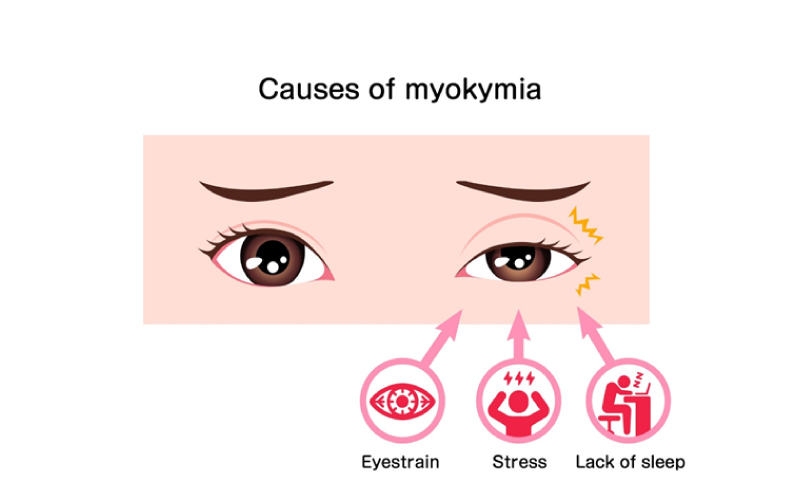
Modern medicine typically attributes minor eyelid twitching (myokymia) or facial nerve spasms to chronic stress, dehydration, fatigue, or excessive caffeine intake, which cause the orbicularis oculi muscle to hyper-irritate.
The TCM Perspective: The “Wind” and the Spleen-Liver Connection
In TCM, involuntary twitching is classified as a manifestation of “Wind” (风). This can either be an invasion of external pathogenic wind or a sign of internal disharmony.
According to the TCM Theory of Five Wheels, the eyelids are known as the “Meat Wheel” (肉轮), which is directly governed by the Spleen. Therefore, this condition is most intimately linked to the Spleen and the Liver:
- The Spleen Governs Muscles: The Spleen is responsible for the integrity and tone of all muscles. When Spleen Qi is weak, the muscles lose their anchoring or “holding” strength. This is why older adults, when losing their appetite, begin to waste away and lose muscle mass — their Spleen can no longer support the flesh.
- The Liver Governs Tendons: The Liver controls the tendons, fascia, and nervous signaling. When Liver Blood is insufficient, it triggers a state of “Blood deficiency generating Wind,” which manifests as physical twitching and spasms.
Common TCM Syndromes
1. Qi and Blood Deficiency (Malnourished Meridians)
When Liver Blood is depleted, the tendons and vessels around the eyes are starved of nutrients, leading to twitching.
- The Logic: Think of it as a low battery. Your body simply lacks the necessary energy (Qi) to hold the muscle steady.
- Characteristics: The twitching is weak and faint.
- High-Risk Groups: People who overuse their eyes (excessive screen time), those recovering from prolonged illness, postpartum or post-surgery patients, and individuals suffering from mental exhaustion and overthinking.
- Accompanying Symptoms: Pale complexion, easy fatigability, heart palpitations, a heavy sensation in the body and eyelids, poor appetite, and loose or sticky stools.
2. Internal Liver Wind Agitation
If Blood deficiency is left unaddressed for too long, it progresses into internal Wind. This deficient Wind flares upward to the head and face, causing severe twitching.
- The Logic: Imagine a dried-up riverbed. When there is a lack of water (Blood), the dry soil easily kicks up dust and debris at the slightest breeze (Wind).
- Characteristics: The twitching is intense, persistent, rhythmic, and visibly pulls at the facial muscles and the corners of the mouth. It noticeably worsens with emotional fluctuations.
- High-Risk Groups: Individuals under immense stress, anxiety, or emotional tension, and those who frequently stay up late. This causes Liver Qi to stagnate, eventually transforming into internal Wind.
- Accompanying Symptoms: Dizziness, dry eyes, irritability, a short temper, and poor sleep quality.
Clinical Case Studies
Case 1: The Stressed Shop Owner
A boutique owner experienced continuous lower eyelid twitching for an entire month during the renovation and grand opening of his new shop. He was a very gentle, mild-mannered man and did not consciously feel stressed. After an eye examination ruled out structural defects, we administered acupuncture just once and prescribed a one-week course of herbal medicine. His symptoms drastically subsided. After a second follow-up session, the twitching stopped completely.
Case 2: The 20-Year Chronic Facial Spasm
A high-level accountant at a government agency spent decades staring at numbers while managing a large team. Over time, her condition escalated into severe upper and lower eyelid spasms that violently pulled at her facial muscles and the corner of her mouth. She had suffered from this for 20 years. Western brain scans ruled out neurological diseases, and surgery was recommended as a last resort.
Upon her recent retirement, she sought TCM ocular care. We initiated a TCM management plan of acupuncture twice a week combined with daily oral herbal decoctions. After two months, she has shown continuous improvement. Her eye muscles are noticeably relaxed, the frequency of spasms has plummeted, and she can finally open her eyes comfortably in the morning. She looks much more relaxed in photos, sees a bright light at the end of the tunnel, and is happily continuing her TCM treatment with us.
Simple TCM “First-Aid” for Twitching Eyes
If your eye starts twitching uncontrollably, try these quick self-care methods to soothe the nerves:
- Warm Compress: Apply a warm towel or a self-heating eye mask over your eyes to instantly relax the local meridians.
- The “Palm Cupping” Method: Rub your hands together vigorously until they are hot, then gently cup your warm palms over your closed eyes to ease eyelid tension.
- Acupressure Point Massage: Gently press and knead the points around the eye — Zanzhu (BL2) at the inner brow, Sizhukong (TE23) at the outer brow, and Taiyang (EX-HN5) at the temples to break up local Qi stagnation.
- The Ultimate “Reset Switch”: If the twitching is exceptionally violent, firmly massage the Yanglingquan (GB34) point. Known as the “Influential Point of Tendons,” this point is the master switch for relieving spasms across the body’s fascia, nerves, and muscles. It is located on the outer side of the lower leg, in the depression anterior and inferior to the head of the fibula.
Lifestyle & Dietary Habits for Recovery
1. Protect Your Eye Blood
Reduce screen time and avoid prolonged eye strain. Make sure you get enough sleep. TCM firmly states that “When a person lies down, blood flows back to the Liver.” Quality sleep is the absolute best way to replenish Liver blood.
2. Dietary Restrictions
- Avoid “Fa Wu” (Trigger Foods): Cut back on pungent, scattering spices like chili peppers and excessive black or white pepper. These hot, drying ingredients consume your body’s precious Yin blood, aggravating the internal Wind.
- Limit Caffeine: Coffee and energy drinks possess a strong “ascending and dispersing” nature. Overconsumption fuels Liver Yang, making eye spasms significantly worse.
3. Emotional Regulation
Consciously practice stress relief. Let go of perfectionism and lower your expectations of yourself and others.
- 5-Minute Bedtime Meditation: Before sleeping, spend 5 minutes visualizing a gentle stream of energy flowing from the top of your head down to the soles of your feet. This helps guide hyperactive, upward-floating Liver Yang back down to its roots.
Your Body’s Internal “Traffic Light”
Think of eyelid twitching as your body’s internal warning light. It is telling you three things:
- Your Spleen and Stomach are exhausted (muscles are losing control).
- Your Liver Blood is depleted (tendons are starved of nutrients).
- Your stress levels have maxed out (internal Wind is acting up).
⚠️ When to Seek Western Medical Evaluation: While most cases are benign, you should seek a comprehensive neurological check-up to rule out underlying nerve issues if your eye twitching persists for months without stopping, is accompanied by spreading facial spasms, or results in the inability to open the eye, visual decline, double vision, or distinct ocular pain and redness.
Springtime Alert: The Seasonal Connection
As we approach the Lunar New Year and the season of Spring, eye twitching often becomes much more prevalent. This is not a coincidence — it is a direct resonance between nature and human biology.
- The Rise of Liver Wind: In TCM, Spring corresponds to the Liver and the element of Wood. Just as trees stretch upward and outward in Spring, the human body’s Liver Qi naturally surges. If Liver Qi rises too abruptly or aggressively, it generates “Liver Wind,” triggering sudden eye twitches.
- Dryness Depletes Blood: Spring weather is notoriously windy but dry. This dry environment easily saps Liver Blood. When Liver Blood runs low, the ocular tendons lose their nourishment, leading to spasms.
- Wood Overacts on Earth: In the Five Elements theory, an overactive Liver (Wood) will easily “bully” the Spleen and Stomach (Earth). As the Spleen weakens under this seasonal pressure, the eyelid muscles lose their anchoring strength, resulting in persistent twitching.
Your Spring Anti-Twitch Checklist:
- Eat Your Greens: Consume plenty of green vegetables (like spinach, kailan, and broccoli). The color green enters the Liver meridian and naturally smooths out stagnant Liver Qi.
- Sleep for Blood: The hours between 1:00 AM and 3:00 AM are when the Liver meridian is most active. Avoid staying up late, especially during the Spring season.
- Spring Herbal Tea: Steep a soothing daily tea using Chrysanthemum, Cassia Seeds (Jue Ming Zi), and Goji Berries to clear Liver heat and moisten dryness.
- Look Far: Spend more time outdoors and let your eyes rest on distant green landscapes.
- Open Your Chest: Do frequent chest-opening stretches. This physically opens up the ribcage, unblocking the Liver and Gallbladder meridians that run along the sides of your body.
Listen to your body’s subtle signals. Take care of your Spleen and Liver, manage your stress, and give your eyes the true rest they deserve!
