
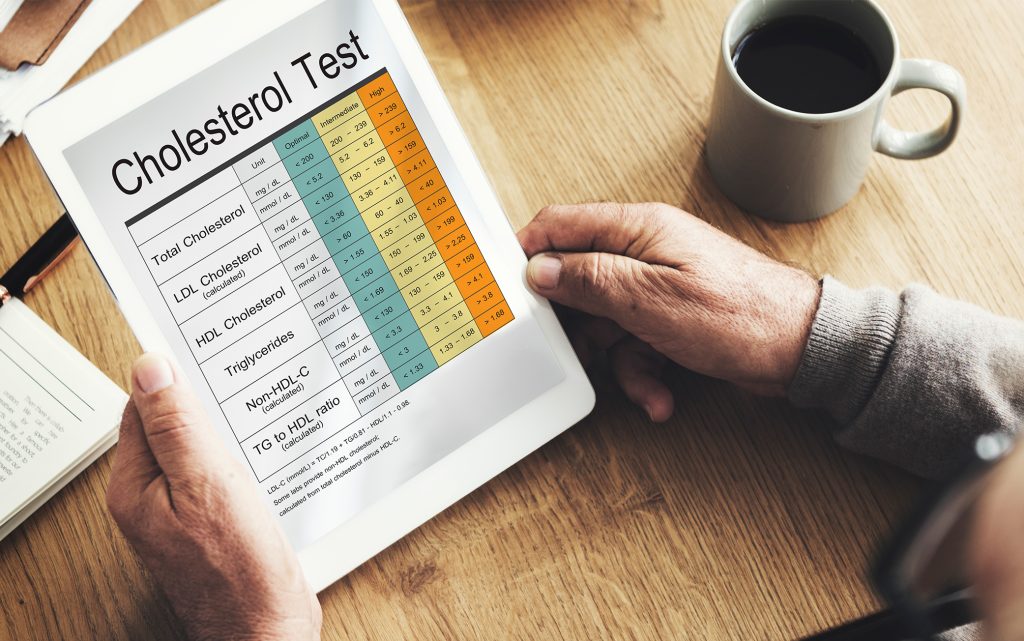
UNDERSTANDING CHOLESTEROL LEVELS: WHAT DO YOUR NUMBERS MEAN?
1. What happens when Americans do not have healthy cholesterol levels?
Unhealthy cholesterol levels may refer to low-density lipoprotein (LDL) which are the “bad” or unhealthy kind of cholesterol. High levels of LDL cholesterol can build up in the arteries, forming fatty, waxy deposits called plaques, thereafter clogging and making them to be hardened and less flexible. This overtime build-up can damage the arteries by causing the hardening and narrowing of the arteries, a process called atherosclerosis, which result in blood flow to the heart and/or brain to be reduced or blocked, and the heart to work harder to push blood through these stiff arteries.
Plaque buildup in coronary arteries can disrupt the flow of oxygen-rich blood to the heart muscle. If there is insufficient blood and oxygen to the heart, one may experience chest pain called angina, which is a temporary disruption of blood flow. It is, however, a warning sign of heart attack risk. A piece of plaque may eventually break off and fully block the blood flow to the heart. If the blood supply to a portion of the heart is completely cut off by a blockage, heart attack may occur. If this process occurs in the arteries going to or within the brain, it can result in a stroke.
Plaque can also block off the flow of blood to arteries that supply blood to your lungs, intestinal tract, and lower limbs and feet which results in peripheral arterial disease (PAD).
2. How can TCM reduce cholesterol?
TCM believes high levels of cholesterol is due to the dysfunction of organs, and could result from factors such as unhealthy lifestyle, stress and inappropriate diet. Good health typically depends on a good flow of blood and qi, along with a well-maintained yin-and-yang balance. Disharmony in this flow and balance can result in poor health, including high cholesterol. TCM categorises a patient’s high cholesterol situation into different syndromes after understanding symptoms exhibited by one’s body, coupled with clinical signs observed through the tongue and pulse – namely Spleen Deficiency-Phlegm Dampness, Qi Stagnation-Blood Stasis, Liver & Kidney Yin Deficiency, Spleen & Kidney Yang Deficiency syndromes. Through analysis of these signs and symptoms, the TCM practitioner diagnoses the underlying pattern(s) of disharmony. After establishing one’s body constitution, treatment plans are customized according to the individual’s condition, including the usage of herbal remedy prescriptions, acupuncture, cupping, moxibustion, scraping etc.
Herbs are then chosen to make up the medicinal formula accordingly. Chinese herbs are classified according to their functions and effects on the body (i.e., in turn determined by the properties, nature, and temperature characteristics of the herbs). There are several groups of herbs that address or resolve dampness, phlegm, qi-stagnation and blood stasis. Other treatment methods such as acupuncture and cupping etc are also carefully selected to suit the treatment plan.
It is known that several Chinese herbs have been shown to have positive effects on lowering cholesterol. The list is extensive and includes the following: Dan Shen (Radix Salvia Miltiorrhiza) 丹参, San Qi (Panax Notoginseng) 三七, Shan Zha (Fructus Crataegi) 山楂, He Shou Wu (Polygonum Multiflorum) 何首乌, Huang Lian (Coptis Chinensis) 黄连, Bai Guo (Ginkgo Biloba) 白果, Dang Gui (Angelicae Sinensis) 当归, Sheng Jiang (Fresh Ginger Rhizome) 生姜, Ge Gen (Radix Puerariae) 葛根, Jue Ming Zi (Semen Cassiae) 决明子, Gou Qi Zi (Lycium Barbarum) 枸杞子, Pu Huang (Pollen Typhae) 蒲黄, Du Zhong (Cortex Eucmmiae Oppositae) 杜仲, Shan Yao (Radix Dioscoreae Oppositae) 山药, Fu Ling (Sclerotium Poriae Cocos) 茯苓, Bai Zhu (Rhizoma Atractylodis Macrocephalae) 白术, Gua Lou (Fructus Trichosanthis Kirlowii) 瓜蒌, Sheng Di Huang (Radix Rehmanniae Glutinosae) 生地黄, Sang Ji Sheng (Ramulus Loranthi Seu Visci 桑寄生, Nu Zhen Zi (Fructus Ligustri Lucidi) 女贞子, Ju Hua (Flos Chrysanthemi Morifolii) 菊花, and Ze Xie (Rhizoma Alismatis) 泽泻. Some herbs also have the ability to clear toxins within the body. The blood vessels, too, are detoxed, which helps prevent and treat cardiovascular conditions such as atherosclerosis and cerebrovascular illnesses, such as stroke. Others are able to lower blood pressure, improve bowel movements, and build a stronger digestive system too, thereby reducing lipid absorption in the intestines and aids in weight management too while tackling the issue of high cholesterol.
3. Who should or should not use TCM herbs for high cholesterol?
TCM is generally widely accepted by anyone, however, it is advisable to consult a physician as individual’s physique and symptoms may differ or when your condition persists or does not improve. For patients who are consuming western medications and/or other supplements, it is advisable to have an interval of two hours in between the medications.
4. Are there any other TCM remedies that help Americans keep their cholesterol levels in good standing? Please share if there is any lifestyle/DIY tips.
- Drink sufficient water (approximately 1.5 to 2 litres) daily
- Use less salt and sugar
- Do not overeat each meals, chew your foods well and eat at a slower pace
- Consume more vegetables, fruit, mushrooms, barley and oats to replenish Stomach Yin
- Avoid eating animal fat and organs, shellfish, cholesterol-rich foods, and sweets to reduce Phlegm and Dampness
- Limit alcohol and smoking
- Avoid negative emotions and learn to relax and control stress levels
- Keep your home environment quiet with fresh air and reduce noise pollution to keep spirits and mind calm
- Exercise for 30 minutes on three or more days a week to enhance Qi and Blood circulation
- Ensure sufficient rest and good sleep quality daily
- Go have regular health checks and cholesterol level reviews
- Take TCM herbal teas
- Perform acupoint self-massage regularly on Zu San Li (ST36) 足三里, San Yin Jiao (SP6) 三阴交, and Feng Long (ST40) 丰隆.
- Consume TCM congees
- Hawthorn Congee (suitable for meat lovers)
- Hawthorn 30g, Red Yeast Rice 100g, Rock Sugar
- Boil hawthorn to concentrated juice and cook rice with juice. Sweeten with rock sugar as desired.
- Note: consume warm, once daily, for 10-12 days, not to be taken on empty stomach.
- White Chrysanthemum & Cassia Seed Congee
- White Chrysanthemum 10g, Cassia Seeds 10g, Red Yeast Rice 50, Rock Sugar
- Roast cassia seeds till fragrant, boil them with chrysanthemum, filter and drain. Cook rice with filtrate till desired consistency. Sweeten with rock sugar as desired.
- Note: consume warm, once daily, for 5-7 days.
- Hawthorn Congee (suitable for meat lovers)
